
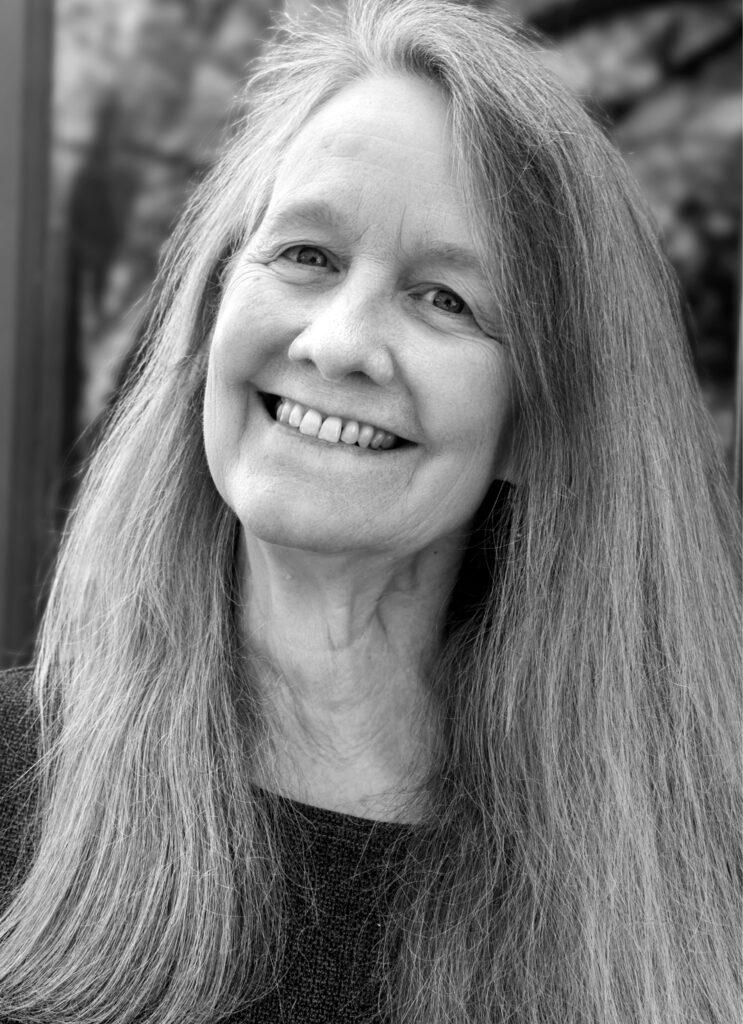
Jennifer Clarvoe is the author of two books of poetry: Invisible Tender (Fordham, 2000), and Counter-Amores (University of Chicago, 2011). Her awards and fellowships include the Kate Tufts Prize, the Poets Out Loud Prize for Invisible Tender, a fellowship from the Sewanee Writers Conference, a residency at the James Merrill House, and the Rome Prize in Literature. She taught literature and creative writing at Kenyon College for many years. She lives in Somerville, MA, with her husband, Tony Sigel.
Jennifer Clarvoe’s PIANO PIANO immerses us, little by little, in a realm where thought provokes feeling and feeling transfigures thought — until all at once we find ourselves somewhere altogether strange, altogether familiar. If the poems and the collection as a whole exhibit a tonal range and texture echoing Hopkins, Frost, and Bishop, their pellucid complex surfaces recall the paintings of Corot and Cézanne and the music of Scarlatti, Chopin, and (in their built-in sacred silences) Arvo Pärt. “The music was always / changing the current carrying you along // into the parlor or over the cliff, but always // in it together.” Here we are, listening to a clairvoyant voice by turns startling and soothing, often both at once. Jennifer Clarvoe is a master of key change, a poet of “Severity and invention,” of the fleeting and the long-lasting, who knows how to work all three pedals on a piano and when to hold a note that will cast a spell.
Phillis Levin
In this her third collection of poetry, Jennifer Clarvoe turns to face some harsh truths. Things do fall apart, we age and die, loved ones do too. Great civilizations fall, and immortal works of art do not quite last forever. The question is how best to respond to the difficult facts of life. Clarvoe’s own answer is implied in the book’s title, PIANO PIANO. Ordinarily a musical notation, the phrase directs the performer to proceed slowly, quietly, gently. Clarvoe expands that idea into a method of responding to loss, pain, and disappointment. Instead of recoiling in denial, Clarvoe stays with the perplexity loss brings, and sometimes emerges with new understanding, perhaps even acceptance. This is the case, for instance, in “Key Change,” an elegy for the poet’s father that begins the book, and it is the case too in “Ode on a Fibroid Infarction,” an extended meditation on the body’s mortal vulnerabilities. Sometimes Clarvoe’s ally in these poems is the joy she takes in language itself, especially in revelatory word play. This poet is also a virtuoso when it comes to crafting poetic form. From iambic lines to free verse, from sonnets to a sestina, and in rhymes full and slant, this poetry reminds me of Frost’s remark that there is something about poetic form that mitigates despair. Clarvoe I think would agree and add, as she writes near the end of this book, it would help if the poet were to “slow down / let things sink in,” advice which is the essence of PIANO PIANO.
Fred Marchant
In PIANO PIANO, Jennifer Clarvoe takes her signature keen attention, gorgeous music, and all-around erudition to new and world-shattering places. Clarvoe's poems immerse us in art conservation, street photography, birds and clocks and bird clocks. They trace literary and literal lineage; they burn with indelibility and burn their indelibility into us: "Don't photograph that / I tell myself but my mind / snaps it anyway."
Natalie Shapero